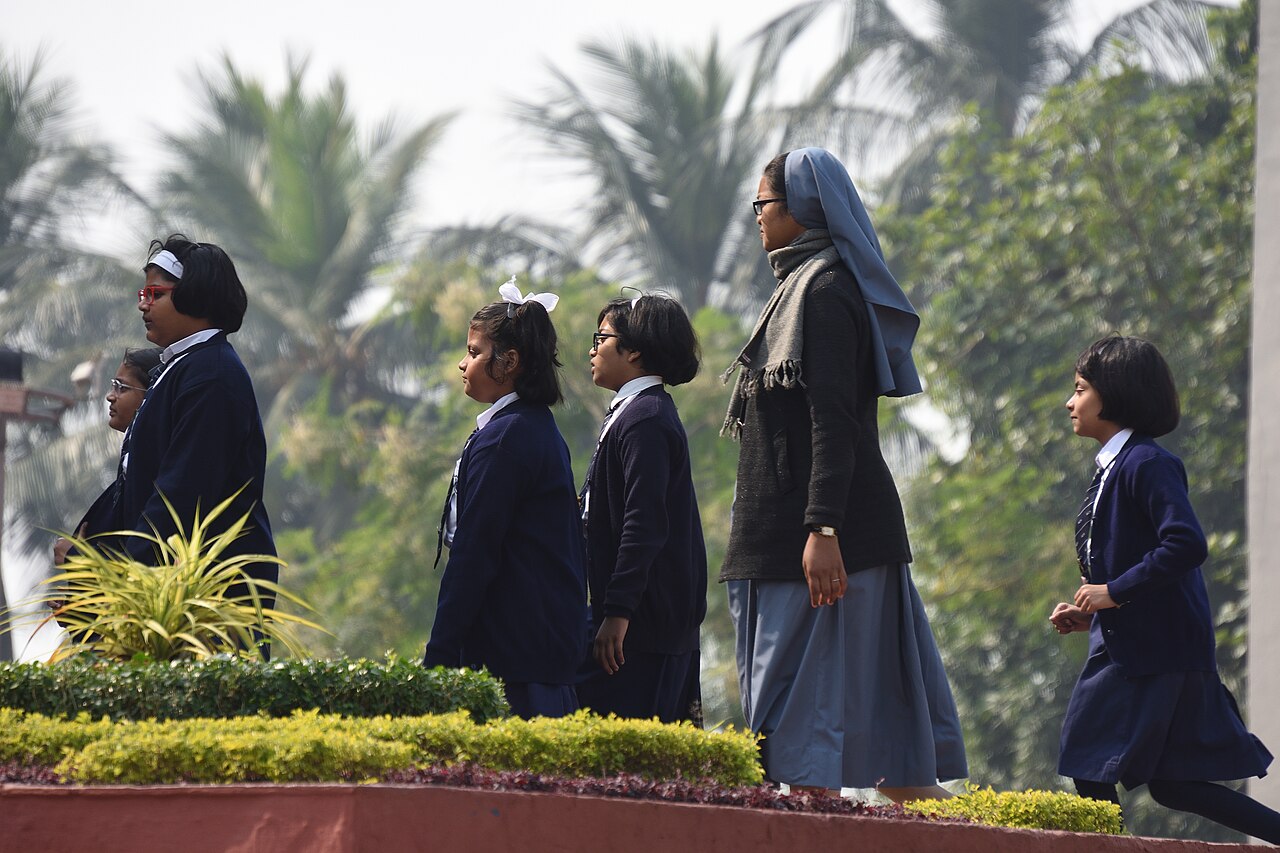
What we are working towards
Advancing an inclusive and equitable society through meaningful education, shared learning, and critical consciousness.
What we do about it
To empower children, youth, and communities through inclusive, participatory, and context-responsive education that cultivates critical thinking, strengthens collective action, and nurtures active, compassionate citizens committed to dignity, equality, and social justice.
Six things we will not trade away
Equality
Every child and every woman we work with has the same claim on our attention, regardless of caste, faith, gender, ability or income.
Justice
We name the structures that keep people out of learning rather than treating exclusion as an unfortunate accident.
Critical inquiry
Questions come before answers — including questions about our own programmes and our own results.
Compassion
Nobody learns while being shamed. Warmth in a classroom is not softness; it is a precondition.
Participation
The people affected by a decision take part in making it. That includes children, in ways appropriate to their age.
Accountability
We are answerable first to the communities we work with, and then to those who fund the work.
What the mission commits us to
A mission statement is only worth what it changes about daily decisions. Ours commits us to specific things — and to being called out when we fall short of them.
- Inclusive — we go to the children least likely to be reached: first-generation learners, girls, children with disabilities, migrant and out-of-school children.
- Participatory — every programme is co-designed with the teachers, parents and community members who will carry it.
- Context-responsive — materials in the language of the home, calendars that respect harvest and migration cycles, methods adapted district by district.
- Cultivating critical thinking — success is a child who can construct an argument and question a claim, not one who can recite a chapter.
- Strengthening collective action — we build groups, not individual dependents: reading circles, teacher networks, women's collectives.
- Nurturing active citizens — young people who know their entitlements and act on them together with others.
The aim is not that people should be helped. The aim is that they should be able to act. Kabir Foundation
See how this looks in practice
Our three programme areas turn these commitments into work on the ground.